NFC is a tool, not an end in itself
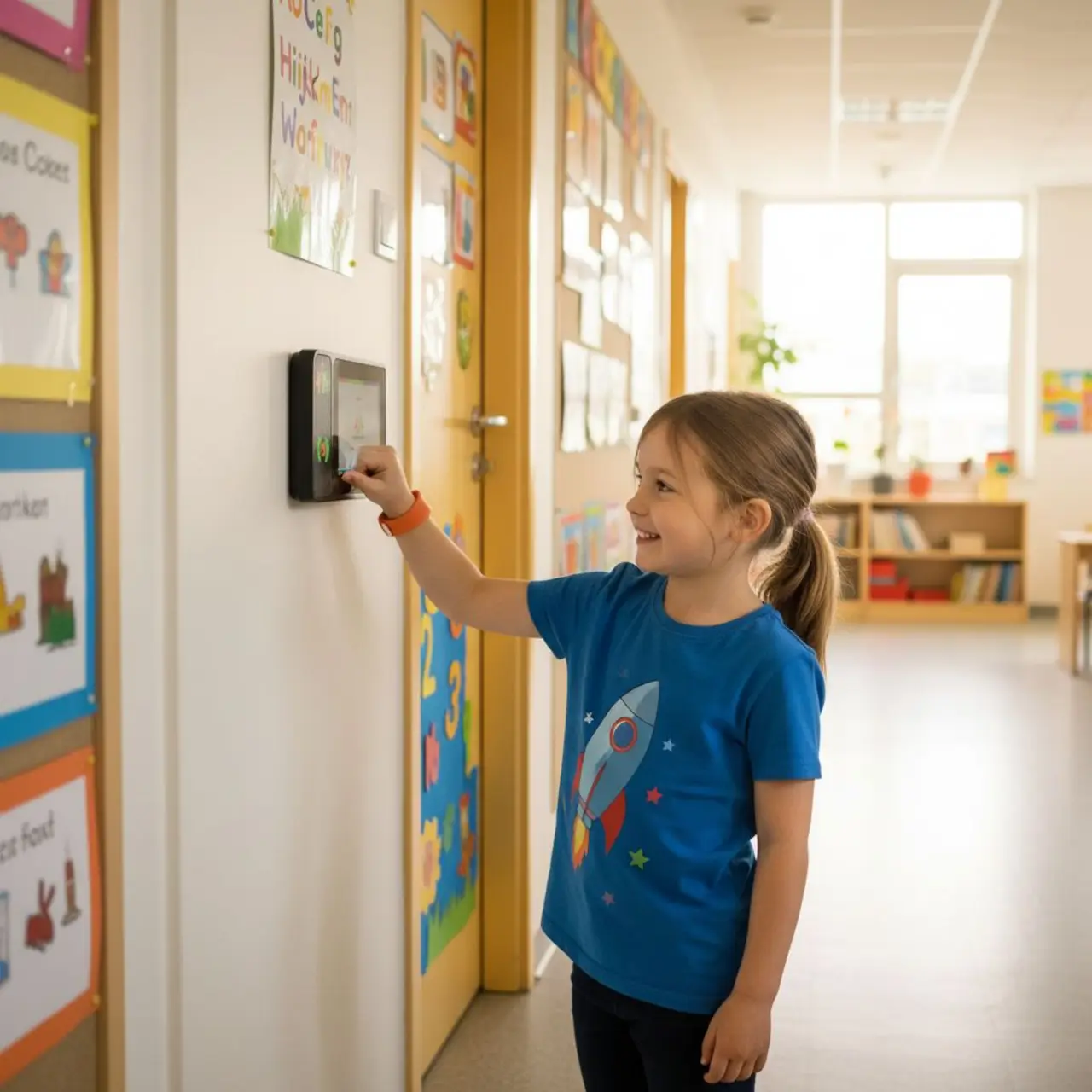
NFC stands for Near Field Communication. In after-school care, it lets children confirm short steps themselves: checking in, changing rooms or checking out.
To do this, an NFC wristband is assigned to a child once. At the NFC terminal, the child holds the wristband up to the reader for a moment and gets immediate feedback.
One central point or one per room
A site can use a single NFC terminal at a central check-in point. In a room-based model, NFC terminals are placed in suitable rooms or at activities and supervision points. Which option fits depends on the building, the daily structure and your educational approach.
If children often move between rooms, room-based tracking can make sense. If you only need daily attendance, the setup stays simpler.
The app is still where your team works
In the Staff app, care staff see which room each child is currently recorded in. There, they can search for children, check pick-up details and change information when needed. NFC adds to this process, but it replaces neither supervision nor your team's professional judgement.
NFC is optional
Not every site needs hardware. Your team can also keep attendance entirely in the app. Before deciding, look together at rooms, room changes, devices and how precise attendance needs to be.
Conclusion
NFC works particularly well where there are many short changes and children should confirm these steps themselves. Whether it is the right choice depends on how your site actually runs its day.